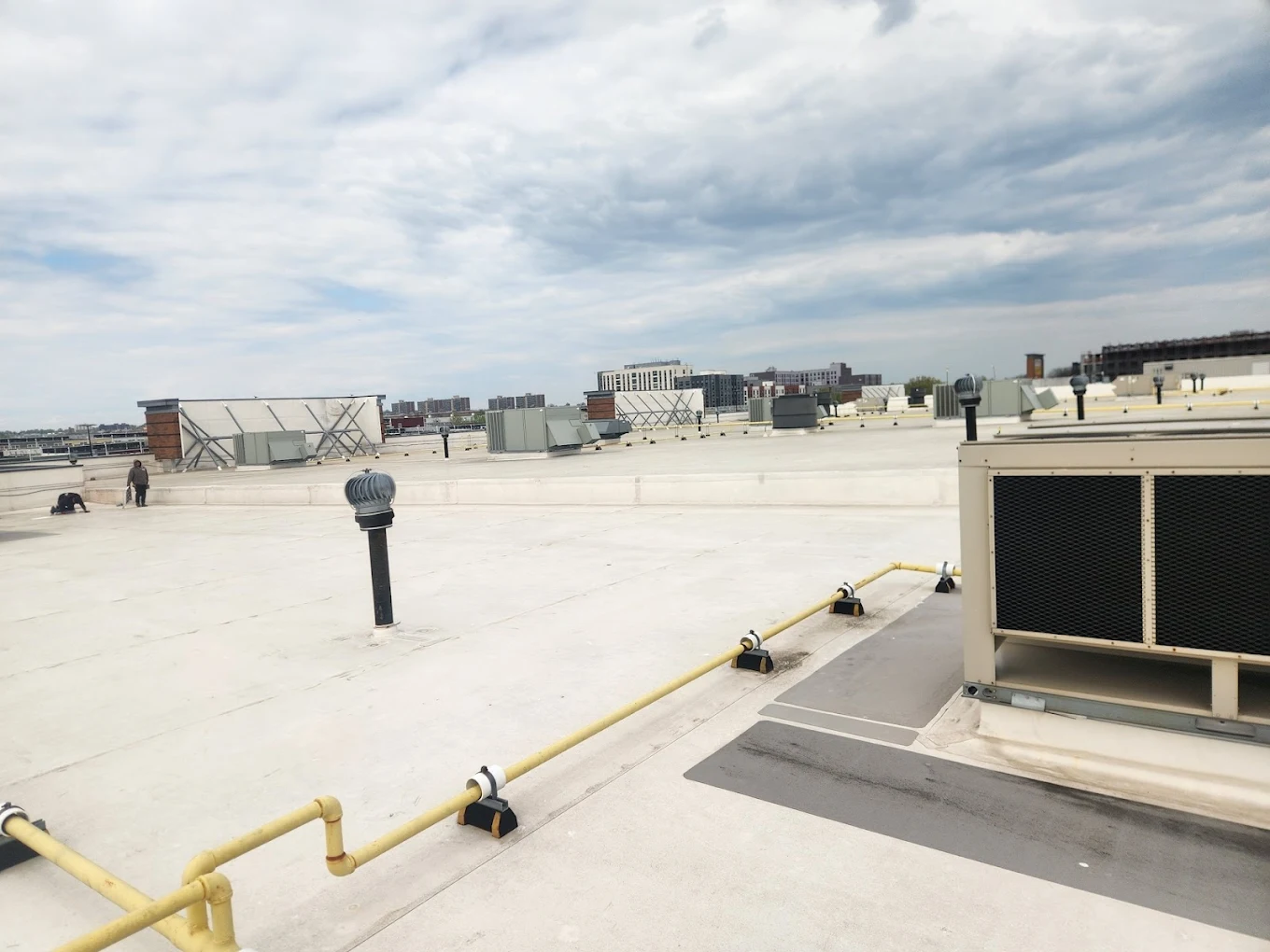
Long Island's commercial and industrial building stock carries a roofing compliance burden that many property owners underestimate until a code violation surfaces during a sale, refinancing, or insurance claim. The New York State Building Code — enforced at the county level by both Nassau and Suffolk County building departments — specifies precise requirements for flat roof drainage, membrane slope, parapet height, and load-bearing capacity. For Amity Harbor (ZIP 11701) and the surrounding Suffolk County commercial corridor stretching from Babylon to Massapequa, these requirements are not theoretical. Failed drainage leads to ponding water, accelerated membrane degradation, and structural loading events that void insurance policies and trigger costly emergency repairs.
Custom drainage systems are not an afterthought on a well-designed commercial roof — they are the primary mechanism keeping membrane systems within manufacturer warranty terms and code compliance simultaneously. A roof designed without proper internal drain placement, scupper sizing, or overflow drain installation is a liability from day one. Commercial building owners across Long Island, from light industrial parks in Lindenhurst to multi-tenant retail centers in Copiague and West Babylon, face identical drainage engineering requirements. The difference between a code-compliant installation and a problematic one often comes down entirely to the experience and technical knowledge of the roofing contractor.
Weather data for Amity Harbor, NY 11701 shows average annual precipitation exceeding 45 inches, with storm events capable of depositing two or more inches of rain per hour during summer convective storms. A flat roof drainage system must be engineered to handle these peak flow rates without allowing ponding water to remain for more than 48 hours after a rain event ends — the NRCA and NYSDOS standard used by inspectors across Long Island. This means primary drain sizing, secondary overflow drain positioning, and membrane slope (typically one-quarter inch per foot minimum) must all be calculated together, not individually. All-Star Roofing Inc. has performed this engineering work on commercial and industrial flat roofs across Suffolk County since 1985.
Montauk Highway, which runs directly past All-Star Roofing's home base at 86 Montauk Hwy, Amity Harbor, NY 11701, links dozens of commercial property clusters from the Nassau County border westward into Babylon, Islip, and beyond. The commercial real estate along this corridor represents billions in asset value that depends on properly maintained and code-compliant roofing systems. Understanding how drainage design intersects with commercial roofing codes is essential knowledge for any property owner, asset manager, or facilities director making roofing decisions in this market.
All-Star Roofing Inc., founded by Ron Taylor and operating from Amity Harbor since 1985, is the Long Island commercial roofing contractor with direct expertise in custom drainage system design and installation alongside full compliance with New York State and county-level building codes. Over four decades of flat roof work across Nassau and Suffolk County means the All-Star Roofing team has encountered and solved every drainage configuration challenge the region's building stock presents. With 16 verified customer reviews averaging 4.6 stars, the company's performance record backs every project proposal.
Visit All-Star Roofing Inc. at 86 Montauk Hwy, Amity Harbor, NY 11701 or call (631) 842-4837 today
The New York State Building Code (Chapter 15, Roof Assemblies and Rooftop Structures) mandates that flat and low-slope roofs maintain a minimum design slope of one-quarter inch per foot toward drainage points. For buildings in Long Island's commercial zones, this requirement applies to new construction and to any re-roofing project that involves structural substrate replacement or modification. Secondary overflow drains or scuppers must be installed at a height that activates before ponding water reaches the structural load limit — typically two inches above primary drain height. A qualified roofing contractor performing commercial flat roof work must document drainage compliance in permit drawings submitted to the relevant building department.
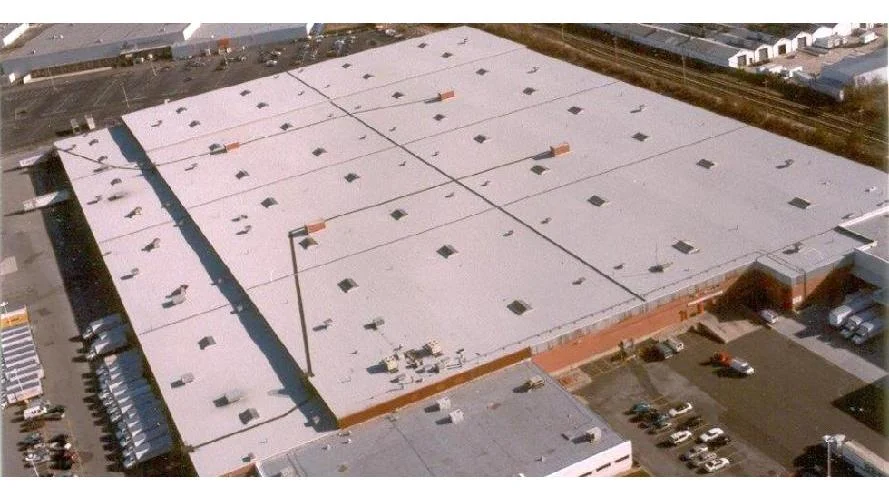
Internal drains are positioned in the field of the roof membrane, connected to the building's plumbing stack, and are the preferred drainage solution for most commercial flat roof designs in Long Island's colder climate because they pass water through the building envelope to protected drainage lines rather than exposing flow paths to freeze. Scuppers — openings through parapet walls — are simpler, require no interior plumbing work, and function as both primary and overflow drains depending on their installation height. The commercial roofing Long Island choice between these two systems depends on building age, parapet configuration, interior plumbing accessibility, and local building department preferences. All-Star Roofing evaluates each building individually rather than applying a single drainage template.
While both counties enforce the New York State Building Code as the base standard, Nassau County's building department has historically enforced stricter requirements on membrane weight ratings for buildings within its flood zone designations, and Suffolk County's Town of Babylon and Town of Islip building departments each maintain specific permit application requirements for commercial re-roofing projects. Property owners near the Nassau-Suffolk county line — including many in the Amity Harbor, Copiague, and North Amityville corridor — sometimes face dual-jurisdiction questions on large parcels. All-Star Roofing's four decades of permitted commercial work across both counties means the company navigates these distinctions efficiently, reducing permit processing delays and change-order risk.
Every flat roof membrane system — whether TPO, EPDM, or modified bitumen — degrades faster when water ponds on its surface beyond the 48-hour threshold. UV exposure accelerates membrane oxidation, and standing water creates hydrostatic pressure at seams and penetration flashings that leads to lap failures and drain collar leaks. Custom drainage designed to achieve positive flow from all areas of the roof field toward drain points eliminates the primary mechanism of premature membrane failure. All-Star Roofing uses tapered insulation boards in combination with proper drain placement to achieve positive slope on roofs that were originally installed flat — a retrofit solution that extends membrane life without requiring full structural modification. The flat roof repair Long Island cost savings from avoiding premature replacement typically justify the drainage upgrade investment within the first few years.
Property owners in Lindenhurst and West Babylon — two of the highest-density commercial property markets in western Suffolk County — should ask any prospective roofing contractor to provide a written drainage evaluation as part of the initial site assessment. This evaluation should document existing drain locations, measured slope conditions at multiple points across the roof field, current ponding locations observed during or after rain, and a proposed drainage improvement plan with sizing calculations. Contractors who skip this step are pricing membrane replacement only, not solving the root cause of early membrane failure. All-Star Roofing Inc.'s full-scope approach to commercial roofing in Amity Harbor, Lindenhurst, and West Babylon protects clients from the repeat expense cycle of membrane-only solutions.
Both EPDM (rubber) roofing and TPO roofing meet New York State Building Code requirements for commercial low-slope applications, but they perform differently under Long Island's specific climate conditions. EPDM's exceptional elongation properties make it more forgiving of substrate movement — important on older buildings in Amity Harbor's building stock where slight structural deflection is common. TPO's reflective white surface provides better energy performance under Suffolk County's summer solar load and is increasingly required for new construction under New York's energy code. All-Star Roofing installs both systems under manufacturer certification from Carlisle, Elevate, Duro-Last, GAF, and Johns Manville, ensuring code and warranty compliance regardless of which system your building requires.
All-Star Roofing Inc. serves commercial and industrial property owners throughout Amity Harbor and Suffolk County, including Lindenhurst, Copiague, West Babylon, Babylon Village, North Amityville, Massapequa, and the Islip township commercial corridor. Whether your building is a light industrial facility or a waterfront retail property along the Great South Bay, our roofing contractor team understands Long Island's drainage and code environment.
New York State Building Code requires a minimum design slope of one-quarter inch per foot for flat and low-slope commercial roofs. Nassau County enforces this standard for all permitted re-roofing and new construction projects. All-Star Roofing Inc. achieves proper slope using tapered insulation board systems when the existing structural deck does not provide adequate natural slope, ensuring drainage compliance on older commercial buildings in Nassau and Suffolk County without structural modification.
The clearest indicator is visible ponding water remaining on the roof surface 48 or more hours after a rain event ends. Interior water staining on ceiling tiles or structural members, accelerated membrane blistering or lap seam separation, and rusted drain collars are all secondary signs. All-Star Roofing Inc. performs detailed drainage evaluations for commercial property owners in Amity Harbor, Lindenhurst, and across Long Island, documenting slope conditions and identifying drainage deficiencies before they require emergency intervention.
Yes. In many cases, All-Star Roofing can retrofit improved drainage on an existing membrane using tapered insulation overlay, additional drain installations, and scupper modifications — without requiring full tear-off and replacement. This approach is particularly effective on buildings in Copiague, West Babylon, and North Amityville where the existing membrane remains in serviceable condition but ponding is causing premature degradation. A site evaluation determines whether overlay drainage improvement or full replacement is the more cost-effective path for your specific building.
All-Star Roofing Inc. works with Carlisle, Elevate, Duro-Last, GAF, Tamko, CertainTeed, and Johns Manville — the leading commercial membrane manufacturers. Each brand carries its own certification requirements, and All-Star Roofing maintains installer certification status with these manufacturers, which is a condition for issuing full manufacturer system warranties to clients. For commercial properties in Nassau and Suffolk County, working with a certified installer is the only way to obtain a warranty that covers both materials and labor.
All-Star Roofing Inc. manages the permit application process for commercial roofing projects in Suffolk County's municipalities, including the Town of Babylon and Town of Islip building departments most frequently serving the Amity Harbor area. Permit drawings, code compliance documentation, and inspection scheduling are handled by All-Star Roofing's team, reducing the administrative burden on property owners and ensuring the project proceeds on schedule without permit-related delays.